Divine Healing: A Living Hope for Body, Soul, and Spirit
The Redemptive Gift That Still Flows Today
In a world marked by pain, diagnosis, and the quiet ache of unanswered questions, the gospel offers something far greater than temporary relief. It offers a comprehensive hope rooted in the finished work of Jesus Christ. The statement of faith declares with quiet confidence: In the redemptive work of the Lord Jesus Christ, provision is made for the healing of the whole person (Isaiah 53:4-5; Matthew 8:16-17). Prayer for the sick and anointing with oil are taught in Scripture (James 5:13-16) and remain a privilege of the Church in this present age (Acts 4:30).
This is not a distant theological idea. It is a living invitation. The same Savior who bore our sins also carried our sicknesses. The same Spirit who raised Jesus from the dead still moves among His people. And the same Church that once watched the lame leap and the blind see is still invited to pray, anoint, and believe that God delights to restore what is broken—body, mind, and spirit.
Scripture’s Steady Witness to Healing Power
From the earliest pages of redemptive history, God reveals Himself as the One who heals. Isaiah looked ahead to the Suffering Servant and declared, “Surely he took up our pain and bore our suffering… and by his wounds we are healed” (Isaiah 53:4-5). Matthew, writing under the inspiration of the Holy Spirit, saw this prophecy fulfilled in the ministry of Jesus: “When evening came, many who were demon-possessed were brought to him, and he drove out the spirits with a word and healed all the sick. This was to fulfill what was spoken through the prophet Isaiah: ‘He took up our infirmities and bore our diseases’” (Matthew 8:16-17).
The Gospels overflow with such moments. A woman who had suffered twelve years with continuous bleeding reached out in desperate faith and was instantly made whole (Mark 5:25-34). A man born blind received his sight after Jesus anointed his eyes with mud and sent him to wash (John 9). A paralytic lowered through a roof walked home carrying the mat that once carried him (Mark 2:1-12). In the early Church, the apostles continued this ministry. Peter and John met a man lame from birth at the temple gate and, in the name of Jesus, commanded him to rise. The man’s feet and ankles became strong; he walked, leaped, and praised God (Acts 3:1-10). Later the believers prayed, “Stretch out your hand to heal and perform signs and wonders through the name of your holy servant Jesus” (Acts 4:30), and the place where they were meeting was shaken.
James, writing to ordinary believers, gave the Church a clear pastoral practice that remains ours today: “Is anyone among you sick? Let them call the elders of the church to pray over them and anoint them with oil in the name of the Lord. And the prayer offered in faith will make the sick person well; the Lord will raise them up” (James 5:14-15). Healing is not reserved for apostolic superstars. It is a privilege entrusted to the gathered people of God in every generation.
Modern Echoes of Ancient Mercy
The God who healed in the first century has not retired. Across the modern world, men and women continue to testify that prayer offered in the name of Jesus still brings remarkable restoration—sometimes instantaneous, sometimes gradual, always pointing back to the Redeemer.
Consider Barbara Snyder of Indiana. For fifteen years she suffered from progressive multiple sclerosis. By the early 1980s she was bedridden, legally blind, and given only weeks to live. Her body was wasted, her muscles atrophied, her future measured in days. Then, during a time of prayer, she heard a clear inner voice: “My child, get up and walk.” She rose from her bed, stood, and began to move. Within moments she was walking, then dancing. Muscles that should have remained useless after years of disuse functioned normally. Her vision returned. Doctors who had overseen her decline later confirmed there was no medical explanation for the sudden, complete reversal. Decades later the healing remained. Her story has been examined by researchers and physicians who found the medical records consistent with an inexplicable recovery timed precisely with prayer.
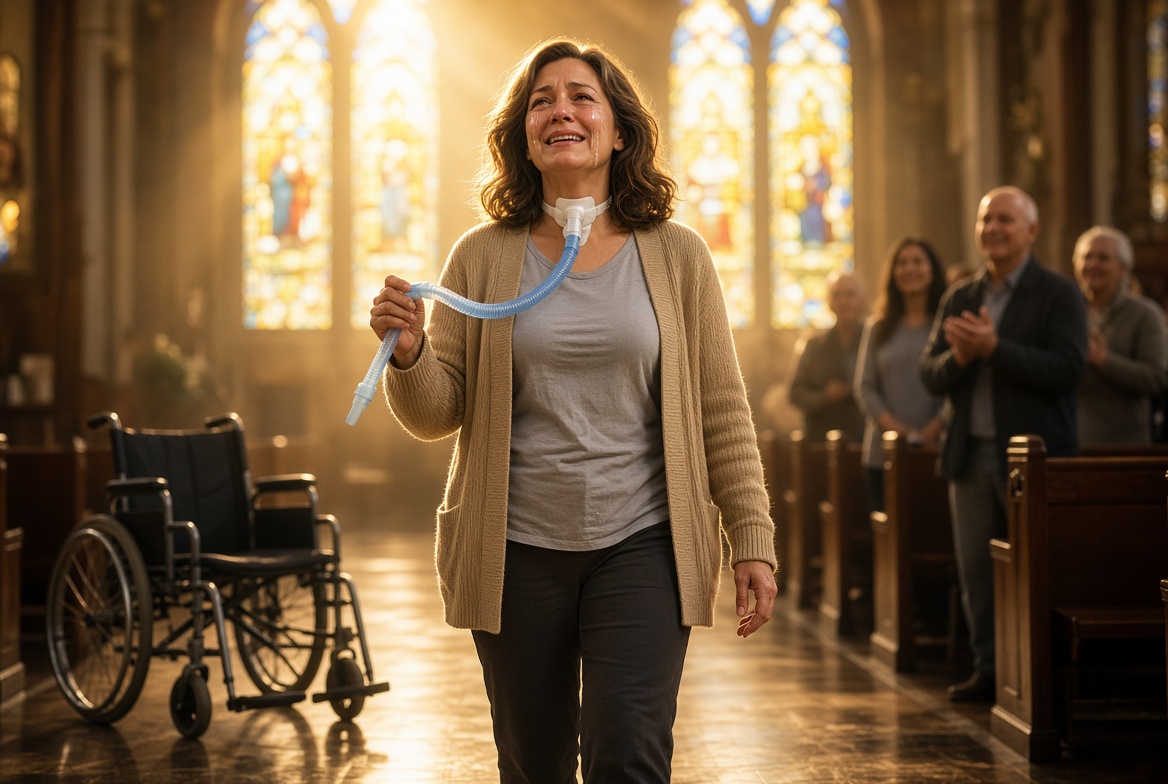
A more recent account comes from Dani Laurion of Michigan. By March 2022 she had spent more than twelve years confined to a wheelchair and, in recent months, dependent on a portable ventilator. At a healing service held at St. Mary Cathedral in Lansing, a word of knowledge was spoken: “The Lord is inflating lungs tonight.” Dani felt compelled to remove the ventilator tube from her throat. Then she stood. She walked the aisle unassisted—something she had not done in over a decade. Her husband, a nurse of nearly four decades, watched in astonishment as the woman he had cared for rose and moved freely. The ventilator was no longer needed. Dani later described the moment as the first time in her life that “nothing stood between God and me.” The healing has endured, and she continues to walk and breathe without the devices that once defined her days.
These are not isolated curiosities. Medical assessment teams in the Netherlands have examined dozens of carefully documented cases of recovery after prayer—conditions ranging from advanced Parkinson’s disease and multiple sclerosis to Crohn’s disease and long-term wheelchair dependence—and classified many as medically remarkable. The common thread is not the absence of medical care but the unexpected timing and completeness of recovery that coincides with intercessory prayer offered in Jesus’ name.
The Privilege Still Offered to the Church
What these stories illustrate is not that every prayer produces an immediate, spectacular miracle, nor that medical science is to be discarded. Rather, they confirm the biblical claim that provision for the healing of the whole person remains available through the redemptive work of Christ. The same Lord who healed in Galilee still hears the prayers of His people. The same oil of anointing James described is still poured. The same name that caused the lame man to leap is still spoken with authority and expectancy.
This privilege carries both comfort and challenge. It comforts the suffering by reminding them that their pain is not outside the reach of the cross. It challenges the Church to recover a simple, expectant practice: gather the elders, anoint with oil, pray in faith, and leave the outcome in the hands of a merciful Father. Some will rise instantly. Others will walk a longer road of progressive restoration. Still others will find their deepest healing in the promise of resurrection. Yet in every case the Church is invited to participate in the ongoing ministry of the risen Christ.
The God who “healed all who were under the power of the devil” (Acts 10:38) has not changed. The wounds that purchased our peace still speak. And the privilege of praying for the sick remains a living inheritance of the people of God in this present age. Therefore let the Church rise with hope. Let the sick be brought. Let oil be poured. Let faith be spoken. And let the name of Jesus be lifted high—because in Him there is still provision for the healing of the whole person.
The Music “Empty Chair in the Sanctuary” – The Lyrics

A gospel dark-country duet for Jaxson R. Harlan & Savannah Grayce
(Slow 6/8, low dobro and church-organ drone. Jaxson’s voice is gravel and midnight rain. Savannah’s is clear as stained-glass light.)
[Verse 1 – Jaxson]
I dragged this body through twelve long winters,
Wheelchair wheels grinding the same old floor.
Doctors wrote the last chapter in pencil,
Said the lungs wouldn’t last anymore.
Then a word cut through the sanctuary hush—
“The Lord is filling lungs tonight.”
I felt the tube come loose in my fingers
And the aisle opened up like a holy light.
[Verse 2 – Savannah]
I watched you stand when standing was over,
Tears on your face like new-fallen rain.
The empty chair sat judging the silence
While you took that first step through the pain.
Isaiah sang it before we were breathing:
He bore our griefs and carried the load.
By His stripes the broken are mended—
Even the ones who thought they were owed.
[Chorus – Together]
So walk this aisle with me, child of the promise,
Leave the ventilator and the fear behind.
The same blood that bought the sinner’s pardon
Still heals the body, still steadies the mind.
James said call the elders, pour the oil,
Acts said stretch out Your hand once more.
We’re living proof the privilege still lingers—
Divine healing walking through the door.
[Verse 3 – Jaxson]
I used to pray for just one more morning,
Just one more breath that didn’t cost.
Now I’m dancing where the pews used to hold me,
Counting every scar as a holy loss.
They can keep their charts and their careful language;
I heard the voice that raised the dead.
“My child, get up.” That’s all it took.
The rest was just the Devil’s thread.
[Verse 4 – Savannah]
Some healings come like thunder at midnight,
Some like a slow thaw in the bone.
Some stay hidden till the last trumpet,
But none of them leave us alone.
The whole person—body, soul, and spirit—
Was paid for on that Roman tree.
So we anoint, we wait, we keep on believing
Until the last enemy is history.
[Bridge – Call and response]
Jaxson: Who took the infirmities?
Savannah: He took them.
Jaxson: Who bore the diseases?
Savannah: He bore them.
Together: Who still stretches out His hand?
The same Jesus who walked Galilee.
Who still raises the sick from the pew?
The same Lord who set the captives free.
[Final Chorus – Together, building]
So walk this aisle with me, child of the promise,
Leave the wheelchair and the night behind.
The same blood that bought the sinner’s pardon
Still heals the body, still steadies the mind.
We will pray, we will pour, we will stand in the gap
Till every last shadow has to flee.
This is the Church’s ancient privilege—
Divine healing, still walking free.
[Outro – Savannah, fading to a whisper, Jaxson humming underneath]
Empty chair in the sanctuary… Still singing. Still singing.