The Scriptures: God’s Verbally Inspired, Inerrant Word—Faithfully Preserved for Our Salvation
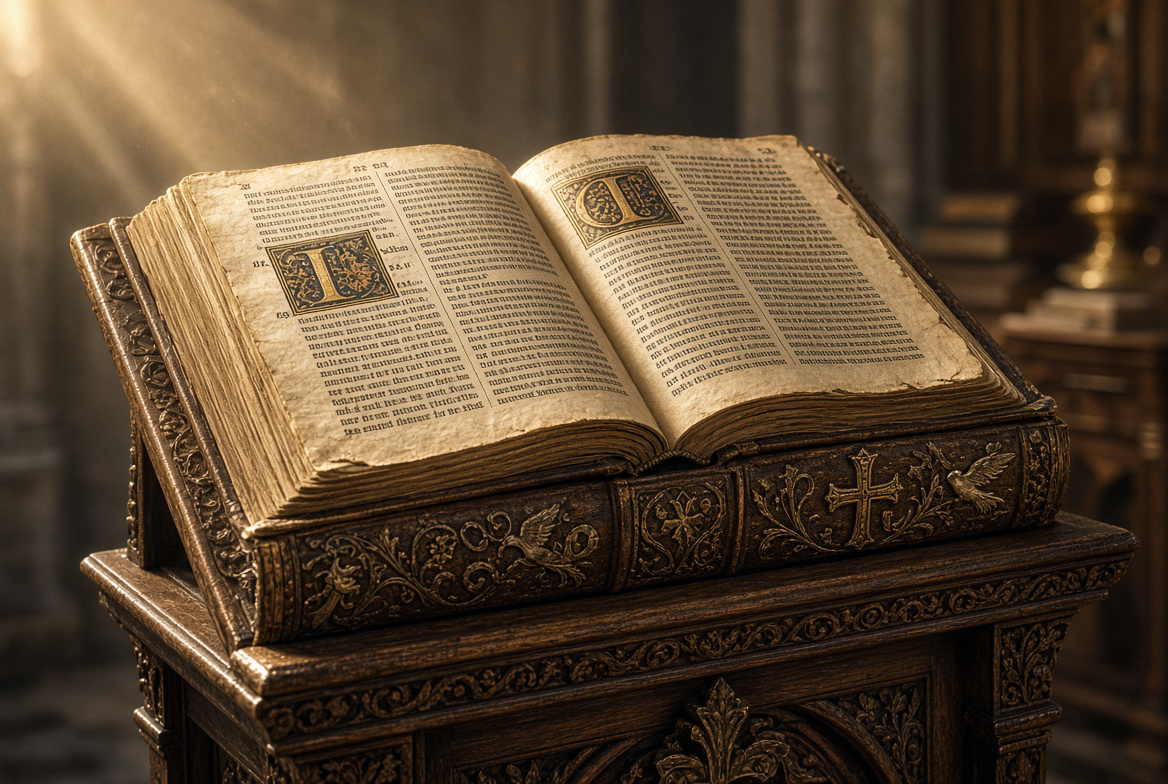
The Old and New Testaments stand as the complete revelation of God’s will for our salvation. They were verbally inspired by God, inerrant as originally given, and remain the divine and only rule of Christian faith and practice. This is not a peripheral claim. It is the foundation on which everything else rests. As the statement of faith affirms: “The Scriptures—The Old and New Testaments, inerrant as originally given, were verbally inspired by God and are the complete revelation of His will for our salvation. They are the divine and only rule of Christian faith and practice.” (2 Peter 1:20-21; 2 Timothy 3:15-17)
These two passages form the heart of the doctrine. Second Timothy 3:15-17 declares that the sacred writings are able to make us wise for salvation through faith in Christ Jesus, and that “All Scripture is breathed out by God and profitable for teaching, for reproof, for correction, and for training in righteousness, that the man of God may be complete, equipped for every good work.” The Greek word theopneustos means “God-breathed.” Scripture is not merely inspiring; it is the product of God’s own breath. Second Peter 1:20-21 adds the complementary truth: “No prophecy of Scripture comes from someone’s own interpretation. For no prophecy was ever produced by the will of man, but men spoke from God as they were carried along by the Holy Spirit.”
Verbally Inspired by the Holy Spirit
Verbal inspiration means that the very words—not merely the thoughts or general ideas—were superintended by the Spirit. The human authors retained their personalities, styles, and vocabularies, yet the final product is exactly what God intended. This is the historic Christian conviction. The early church fathers treated the Scriptures as the very words of God. Later, Reformed and evangelical scholars continued to affirm the same. J.I. Packer captured it well when he noted that inspiration did not turn the writers into automatons; their distinct voices remain, yet the result is that every word carries the weight of God’s authority. R.C. Sproul and others have likewise insisted that inerrancy is the necessary corollary of inspiration: a God who cannot lie does not breathe out error.
This is not a novel invention. It is the consistent witness of the text about itself. The prophets repeatedly declare, “Thus says the Lord.” Jesus Himself treated the Old Testament as the unbreakable Word of God (John 10:35; Matthew 5:17-18). The apostles placed the emerging New Testament writings on the same level (see 2 Peter 3:15-16, where Paul’s letters are ranked with “the other Scriptures”). The result is a book that is both fully human and fully divine—a living and active Word that searches the heart and equips the believer.
Inerrant as Originally Given and Complete for Salvation
Inerrancy applies to the original autographs. The Scriptures, as God gave them, are without error in all that they affirm. They are also complete: nothing needs to be added, and nothing may be subtracted, for the revelation of God’s saving will. They alone are the final authority for faith and practice. Creeds, confessions, and traditions may help us, but they stand under Scripture, never above it.
This claim is not a modern defensive posture. It flows directly from the character of God. If God is true, and if He has spoken, then what He has spoken is true. The Scriptures are the complete revelation of His will for salvation—sufficient to make us wise unto salvation and to equip us thoroughly for every good work. They do not leave us groping for additional secret knowledge or later revelations that override what has already been given. The canon is closed because the revelation is finished.
Faithfully Preserved Across the Centuries
A fair question remains: Can we have confidence that the text we hold today is substantially the same as what was originally written? The answer from modern textual scholarship is a resounding yes.
For the New Testament, the evidence is extraordinary. We possess approximately 5,700 Greek manuscripts (the number continues to climb slightly with new discoveries), plus thousands more in Latin, Coptic, Syriac, and other languages. The earliest fragment, the John Rylands Papyrus (P52), contains portions of John 18 and is dated to roughly AD 125–150—within a few decades of the original composition of the Gospel. Complete or nearly complete codices such as Codex Sinaiticus and Codex Vaticanus date to the mid-fourth century. By comparison, most classical works of antiquity survive in far fewer copies, often separated from their originals by many more centuries. Bruce Metzger, one of the foremost textual critics of the twentieth century, observed that “the quantity of New Testament material is almost embarrassing in comparison with other works of antiquity.”
The variants that exist—numbering in the hundreds of thousands when every difference is counted—are overwhelmingly minor: spelling variations, word order changes, and obvious scribal slips. Scholars such as Daniel B. Wallace note that the number of meaningful and viable variants is a tiny fraction of the total, and that no essential Christian doctrine is jeopardized by any of them. Even critical scholars have acknowledged that the core teachings of the faith remain intact. Sir Frederic Kenyon, the distinguished British textual scholar, concluded that the text that has come down to us is “substantially sound” and that we possess it “in substantial integrity.”
The Old Testament receives similar confirmation from the Dead Sea Scrolls, discovered beginning in 1947. These manuscripts, dating from the third century BC to the first century AD, push the evidence for the Hebrew text back roughly a thousand years earlier than the medieval Masoretic manuscripts that had previously been our oldest substantial witnesses. The Great Isaiah Scroll, in particular, shows remarkable agreement with the later Masoretic tradition. Differences exist—often orthographic or stylistic—but the meaning of the text is stable. The scrolls demonstrate that Jewish scribes transmitted the text with extraordinary care across a millennium. What Jesus read in the synagogue is, in all essentials, the same Hebrew Scripture we can study today.
This is not blind faith. It is confidence grounded in an unprecedented wealth of evidence. God has not only spoken; He has preserved His Word so that every generation may hear it.
The Scriptures are not a fragile relic to be handled with anxious uncertainty. They are the living, God-breathed, Spirit-carried Word that still speaks with authority, still convicts, still comforts, and still points unerringly to Jesus Christ. They stand as the only sure foundation for faith and the only sufficient guide for life. Heaven and earth will pass away, but this Word will never pass away. Let it be the light for our path, the rule for our steps, and the song of our hearts—until the day when faith becomes sight and we see the Author face to face.
The Music “The Word Still Stands, – The Lyrics
(Dark country gospel – minor-key, sparse acoustic, low harmonica, distant thunder feel)
[Verse 1 – Jaxson] Midnight on the prairie, wind cuttin’ through the bone I held that old black book like it was the only thing I owned Pages thin as whispers, words older than the dust They said the truth got buried, that the fire turned to rust
But I can feel the weight of every line that still remains Carried through the ages on the breath that never changed
[Verse 1 – Savannah] I walked through the questions, the scholars and the night Wondered if the letters faded when they left the candlelight They told me time is cruel and every copy wears away But something in these pages wouldn’t let the darkness stay
I heard the Spirit movin’ like a wind across the page Holy men of old spoke, and the Word refused the grave
[Chorus – Both] It’s God-breathed and unbroken Inerrant from the start The Old and New still speaking Straight into the heart Not one word was lost in the fire or the flood The Word still stands… Yeah, the Word still stands
[Verse 2 – Jaxson] Dead Sea caves and broken scrolls, a thousand years of night They opened up the Isaiah scroll and the light was still as bright Five thousand Greek manuscripts, ink that wouldn’t fade Closer to the day they wrote it than the critics ever claimed
No doctrine ever trembled, no gospel ever fell The same voice that formed the stars still speaks and all is well
[Verse 2 – Savannah] When the night gets heavy and my faith feels paper-thin I open to the promises that outlived every sin It makes the simple wise, it cuts the proud down to the bone Complete for my salvation, the only rule I’ve known
It’s the light in every shadow, the anchor in the storm The only voice that never lies when everything else is worn
[Chorus – Both] It’s God-breathed and unbroken Inerrant from the start The Old and New still speaking Straight into the heart Not one word was lost in the fire or the flood The Word still stands… Yeah, the Word still stands
[Bridge – Trading lines] Jaxson: No prophecy of private will… Savannah: Men spoke as they were carried… Jaxson: Every Scripture God-breathed still… Savannah: Equips the soul that’s weary… Both: Through every storm and every age The same true Word remains
[Final Chorus – Both, fuller, slower] It’s God-breathed and unbroken Inerrant from the start The Old and New still speaking Straight into the heart Not one word was lost in the fire or the flood The Word still stands… Oh, the Word still stands
[Outro – Soft, almost spoken] Jaxson: Heaven and earth will pass away… Savannah: But this Word will never fade… Both: The Word still stands.