What 1 Timothy 3:11 Says About Women Who Serve
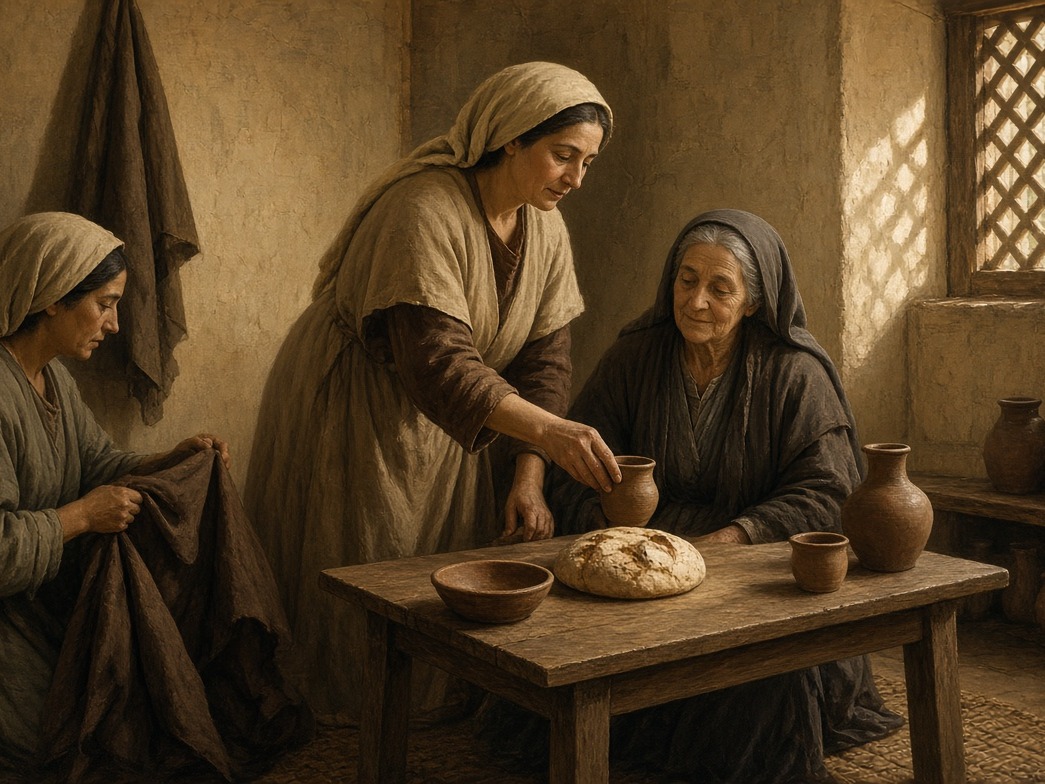
The Room Paul Was Writing Into
Women Likewise What Paul asked of the servants in Ephesus, and why a woman of tested character still has a place in that work.
A woman can sit through a sermon on deacons and leave unsure whether the door was opened or shut. The preacher reads 1 Timothy 3. He comes to the line about women. Then, a verse later, Paul says a deacon is to be the husband of one wife. Both lines are in the same paragraph. They do not feel like they belong together. They do. The confusion is mostly in the English, not in Paul.
This is a lesson for the ordinary reader of that chapter. It is not a brief for a cause. The church in Ephesus was in trouble, and Paul wrote to steady it. What he steadied is still steadying.
Paul had left Timothy in Ephesus for one reason. False teaching had taken root, and someone had to stay and face it. He had already warned those elders, in the farewell of Acts 20, that trouble would rise from inside the flock. Now it had. Myths were being treated as insight. Some were forbidding marriage and calling the refusal holy. Younger widows were drifting from house to house, talking about things they did not understand. The city’s great temple belonged to Artemis, and female religious show was ordinary civic life. A church in that city did not need more performance. It needed people who had already been proved.
That is the setting of the list in chapter 3. Paul is not drafting a modern organization chart. He is telling Timothy what kind of man, and what kind of woman, can be trusted with the work.
Two offices, not one
Read the chapter as a letter, not as a slogan. First come the overseers. An overseer must be above reproach, faithful in marriage, able to teach, not a new convert, and a man whose own house is in order. Teaching and oversight sit on that list.
Then Paul says, “Deacons likewise.” The word is diakonos. It means a servant, a commissioned helper, someone sent to carry a task. In this letter it is a recognized role beside the overseers, but it is not the same role. The deacon list has no line that says “able to teach.” It asks for weight of character: dignified, not double-tongued, not given to much wine, not greedy, holding the faith with a clean conscience. And this, which churches still skip: let them be tested first. Then let them serve, if they are found blameless.
Only then does Paul speak of the women.
The word that English had to choose for
Here is the sentence, as Paul wrote it. Gynaikas hōsautōs semnas, mē diabolous, nēphalious, pistās en pasin. Women likewise dignified, not slanderers, sober, faithful in all things.
The noun is gynē. Greek did not have one word for woman and a second word for wife. The same word carried both. A translator has to decide, from the paragraph, which English word belongs. That is why your Bible may say “their wives,” and another Bible on the same pew may say “the women.” Look at the footnote if there is one. The Greek underneath both is simply gynaikas. Paul did not write “their.” The word “their” was added by translators who believed he meant the deacons’ wives.
He may have. Good men have read it that way for a long time, and the reading is not careless. He has just been talking about deacons. A verse later he is talking about deacons again. A wife who hears the troubles of the poor, and then carries those troubles into the street, can undo the work. “Not slanderers” is a practical line in a town already full of idle talk.
He may also have meant the women who serve. That reading is just as old. John Chrysostom, a Greek speaker in the early church, said Paul was not dropping in a comment about women in general. He was speaking of women who held the dignity of this service. Paul had no feminine form of diakonos to reach for. That word came centuries later. When he commended Phoebe to the church in Rome, he called her a diakonos of the church in Cenchreae — the same noun, used of a woman. The word itself did not stop him.
So the English “wives” is an interpretation of a word that also means “women.” It is not a word Paul used to close the door. Context has to do that work, and the context does not do it cleanly. An honest ministry says so.
The line about one wife
Then comes the sentence that seems to cancel the one before it. “Let deacons be the husbands of one wife, ruling their children and their own houses well.”
The Greek is masculine. It is the same idiom Paul uses for overseers, and the mirror of it appears later for the enrolled widows: a wife of one husband. In that world it named a public virtue. A one-woman man. A one-man woman. Faithful, not divided, not a scandal in the house. It is not a riddle about polygamy, which was not the Ephesian problem, and it is not a rule that a servant must be married. A single man is not shut out by it. Where there is a marriage, the marriage must be clean.
That line is a real limit, and it should be left standing. It tells us Paul is not erasing the difference between men and women, and he is not folding this role into the overseer’s chair. The overseer list is never interrupted with “women likewise,” and the overseer must be able to teach. The deacon is proved in service and in the house. If women are in view in verse 11, the fidelity rule still binds the men, and the same fidelity binds the women. A woman who serves is not a woman excused from the household test. She is a woman who has passed it.
What the paragraph is for
Set the debate down for a moment and listen to the aim. Paul wants no one near this work who is double-tongued, greedy, untested, or loose in speech. He wants the mystery of the faith held with a pure conscience. He wants the house in order, because a disordered house does not become orderly when it is given a title. He wants the women, whether as wives of the men who serve or as servants themselves, dignified, not slanderers, temperate, faithful in all things.
That last list is not a compliment. It is a charge. Ephesus did not need more voices. It needed faithful ones. “Not slanderers” sits next to the younger widows who were saying what they ought not. “Faithful in all things” sits next to teachers whose consciences were seared. The door is character. It has always been character.
A place to serve
If you are a woman reading this, do not wait for the church to finish a debate before you take up the work the paragraph describes. The work is older than the argument. Visit the sick. Sit with the widow. Carry the meal. Keep the confidence you are trusted with. Learn the faith well enough to hold it with a clean conscience. Let your own house be a place a visitor could trust. Submit to being tested. Paul will not hand the task to a novice, male or female. He says so on purpose. Testing is not an insult. It is how the church keeps wolves out of a mercy ministry.
This is not a small calling because it is not the overseer’s calling. The Lord washed feet. The seven in Acts were set apart so that the poor would not be neglected while the word was preached. Phoebe carried the letter to the Romans and was received as a sister and a servant of her church. The enrolled widows of this same letter were to be known for good work, for bringing up children, for showing hospitality, for relieving the afflicted. None of that is a consolation prize. It is the life of the body.
Come into it the way Paul names it. Reverent. Not a slanderer. Sober. Faithful in all things. Proved first. Then serve. The woman who does that work obtains, in Paul’s own words at the end of the paragraph, a good standing and great boldness in the faith which is in Christ Jesus. He did not hang that promise on a title. He hung it on serving well.